

One of the bills in the House is HB 1174, a bill that House Republicans have introduced to Fund Education First. As the name suggests, the proposal is to first develop an education budget signed by the governor before any additional appropriations can be made. If enacted, it would be supportive of our work, but at what cost?
This editorial in the Issaquah Press questions the motives of the House Republicans with this proposed legislation.
House Republicans said their proposal to split the budget was meant to address the state Supreme Court’s 2012 decision that the Legislature wasn’t funding education properly. That might be more believable if they hadn’t been pushing the measure every year since 2006.
In reality, the plan had little to do with education and more to do with stripping funding from the sorts of social programs the GOP has never liked to begin with.
If education were funded first, there would be less left over for everything else, and “everything else” contains some important programs which also contribute to education.
I don't question the motives that the editorial raises, but I struggle with the outcome if the bill were to become law. It could mean devastating cuts to non-education programs that support young people and families, cuts that would then impact the capacity of young people to experience success in school. Though I would very much like the stability of an education first budget, it is difficult to support this proposal because of the potential impacts on other current government programs. What are your thoughts, do you support this bill?
Monday, February 11, 2013


Sunday, February 10, 2013
Questioning the value of observations . . .
This Education Week article is one that reinforces my concern with the new teacher evaluation model in our state. Unlike models in other states, ours does not mandate a specific percentage of the final score being driven by student performance on state or other assessments. My concern is with a possible move in this direction during this legislative session with SB 5246 that would among other things require weighting student growth to consist of 50% of the summative performance of teachers and principals for at least three of the evaluation criteria.
What troubles me with the Education Week article is that in other states the first cycle of implementation of these new models is not yielding the results expected or desired by policy makers. The results are not changing prior practice related to ratings and are not differentiating between "good" and "poor" teachers.
In Michigan, 98 percent of teachers were rated effective or better under new teacher-evaluation systems recently put in place. In Florida, 97 percent of teachers were deemed effective or better.
Principals in Tennessee judged 98 percent of teachers to be "at expectations" or better last school year, while evaluators in Georgia gave good reviews to 94 percent of teachers taking part in a pilot evaluation program.
It is still to early to draw conclusions from this early data, but I am concerned with what may be perceived as a weak component and one that is yielding these high rankings, the observation. Regardless of the model, it will be difficult for building administrators to radically change their practice and ratings in a short period of time and still maintain a positive culture of change and growth. In this situation, value added analysis gains credibility.
"Value added" is a statistical method of estimating the effect of a teacher's instruction on his or her students' test scores.
Tennessee's data released last summer show, for instance, that observers gave only 0.2 percent of teachers the lowest score, compared to quantitative measures that put 16.5 percent of teachers in that category.
Differences such as these in Tennessee, feed into those advocating for value added and the use of student assessment data to remove the focus from teacher growth to student performance. Those advocating for SB 5246 can use the data to support their position because as reformers point out, there should be far more teachers rated "needs improvement" than we are currently experiencing. Even though we don't as of yet have data in our state, this information will be used to support this reform effort. Though I believe that we need to focus on student performance, I question this becoming the focus of what is stated to be a growth model.
For our model to be reliable, we must ensure that administrators and others can document quality instructional practice, collaboratively with the teacher identify an area of growth, and have the capacity to provide the feedback and support necessary for success that sustains over time. From our experience we know that this is difficult to achieve, but it is a commitment that we make to our teachers as we move into this new evaluation model.
What troubles me with the Education Week article is that in other states the first cycle of implementation of these new models is not yielding the results expected or desired by policy makers. The results are not changing prior practice related to ratings and are not differentiating between "good" and "poor" teachers.
In Michigan, 98 percent of teachers were rated effective or better
under new teacher-evaluation systems recently put in place. In Florida, 97 percent of teachers were deemed effective or better.Principals in Tennessee
judged 98 percent of teachers to be "at expectations" or better last school year, while evaluators in Georgia gave good reviews to 94 percent of teachers taking part in a pilot evaluation program.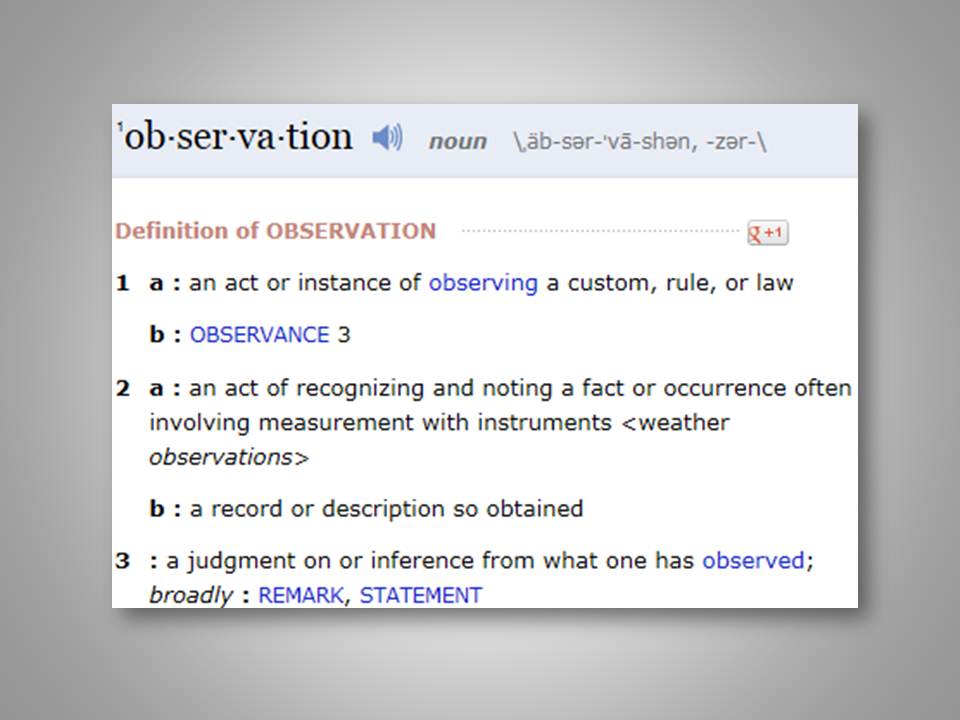 |
| Merriam-Webster |
"Value added" is a statistical method of estimating the effect of a teacher's instruction on his or her students' test scores.
Tennessee's data released last summer show, for instance, that observers gave only 0.2 percent of teachers the lowest score, compared to quantitative measures that put 16.5 percent of teachers in that category.
Differences such as these in Tennessee, feed into those advocating for value added and the use of student assessment data to remove the focus from teacher growth to student performance. Those advocating for SB 5246 can use the data to support their position because as reformers point out, there should be far more teachers rated "needs improvement" than we are currently experiencing. Even though we don't as of yet have data in our state, this information will be used to support this reform effort. Though I believe that we need to focus on student performance, I question this becoming the focus of what is stated to be a growth model.
For our model to be reliable, we must ensure that administrators and others can document quality instructional practice, collaboratively with the teacher identify an area of growth, and have the capacity to provide the feedback and support necessary for success that sustains over time. From our experience we know that this is difficult to achieve, but it is a commitment that we make to our teachers as we move into this new evaluation model.
Thursday, February 7, 2013
A need to dig deeper . . .

Dorn to Testify on
Assessment Reform Bill
House Bill 1450 would drop
number of exams needed for graduation to three
I first posted about this in December when Superintendent Dorn said that it would be an algebra assessment. In the announcement today it said a math assessment.
The bill would
combine the reading and writing tests into a single English Language Arts test,
and it would eliminate one of the math tests, reducing the required tests to
three.
Eliminating one math assessment is a big deal, but so is knowing if it is algebra or geometry. So, I went to the Bill Digest and found that it does not say what the specific math requirement will be, but I learned about two other provisions in the bill that don't appear in the headlines and were not part of the December Seattle Times Op-Ed where I first learned about the proposal.
HB 1450 - DIGEST
Declares an intent to: (1) Begin administering the college-ready and career-ready assessments that are being developed to measure the common core state standards in the 2014-2015 school year;
(2) Combine the current reading and writing assessments into English language arts assessments;
(3) Reduce the number of different assessments that will be required for students to graduate beginning with the class of 2015; and
(4) Decentralize the scoring of the collections of evidence.
Those highlighted were not new to me, but this is the first time I have seen them in a bill and they have big consequences for our system. One means we would officially begin administering the Common Core Assessments in the 2014-15 school year. Four means that the responsibility for collecting and scoring collections of evidence (alternative assessment method) would shift from OSPI and the ESD to the local district. Currently we are given $400 to support the collection of evidence that are submitted to the ESD for scoring. If the HB 1450 were to be enacted scoring would become our responsibility with no revenue for the added responsibility.
Now, back to math. I went to the House Summary of the bill for further information and found that the math assessment would be for algebra. At he same time I learned that future graduation requirements can be met with state assessment or Common Core assessments.
Brief Summary of Bill
- ŸŸChanges the statewide assessment system from measuring student performance in reading and writing to measuring performance in English Language Arts (ELA).
- Ends the Geometry end-of-course test (EOC) after the 2012-13 school year.
- Provides that, beginning with the graduating class of 2015, students may meet the high school graduation standard using an ELA exit exam or a College and Career Readiness (CCR) assessment in ELA.
- Provides that students beginning with the class of 2015 may use results from the Algebra I EOC or a CCR assessment in mathematics for graduation purposes.
- Directs the Washington Student Achievement Council to convene a workgroup to examine how a CCR assessment might be used for higher education decisions.
- Changes the Collection of Evidence alternative assessment from being scored by a state-level panel to being scored at the district level.
Trying to follow the trail of education legislation in Olympia means digging beyond headlines and newspaper summaries of the bill. I support the provisions of 1450 that change the number of assessments for graduation purposes, but do not want our system to assume responsibility for collecting and scoring the collection of evidence portfolios estimated at $400 per student. This would simply be passing the costs from the state to the districts. Following this trail is complex and time consuming, but very important.
Wednesday, February 6, 2013
Learning about 5D+ . . .
Our administrative team and Teaching & Learning coaches spent the day in our first of five Regional Implementation Grant (RIG) training days focused on implementing the new teacher evaluation model, the 5D+ from CEL. For some, it was the first opportunity to learn about the various terminology and formats used by the developers to focus on instructional capacity and supporting teacher growth. For others, it was a continuation of work we have been engaged with in other learning opportunities.
 Reflecting on the day, I leave with the belief that we will find ways to make this requirement a positive contributor to our Classroom 10 journey. It will require collaboration and the capacity to focus on adapting to a new reality, not one that was mandated, but one that supports our belief in the importance of instructional practice, growth over time, and feedback. The tools in the model will increase our capacity for this focus. The journey, however, will not be without bumps along the road as the process is complex, includes issues with emotional attachment for teachers, and will require new structures to become efficient and effective.
Though we know that some buildings have had opportunities to engage in conversations about 5D+, Scott Mitchellg and I are developing a video to formally introduce all staff to the model. This will be followed by continued bargaining around the parameters for the work and introduction of the framework at all buildings.
By the way, our own Shadow Lake Principal, Chris Everett, is one of our trainers, chosen last year in a competitive process at the state level.


Though we know that some buildings have had opportunities to engage in conversations about 5D+, Scott Mitchellg and I are developing a video to formally introduce all staff to the model. This will be followed by continued bargaining around the parameters for the work and introduction of the framework at all buildings.
By the way, our own Shadow Lake Principal, Chris Everett, is one of our trainers, chosen last year in a competitive process at the state level.

Monday, February 4, 2013
An unfortunate future . . .

‘Battle royale’ on schools expected in Legislature
Three weeks into the legislative session, lawmakers appear divided on the key issue of improving schools. With the Senate focused on reform and the House focused on funding, observers are predicting a “battle royale” of negotiations.
The article does a nice job of capturing the differences between the House and Senate and the sideline role being played thus far by Governor Inslee as it relates to education bills. Reading the article once again leaves me deeply concerned with the potential for compromises to the new reforms currently being discussed and those slated for a future hearing The strategy is one of putting the bills in motion and then at the end of the session forcing through some of them as a condition to agreeing on a final budget.
“Clearly, both parties are positioning right now for a showdown that will probably take place at the very end of the session,” said Rick Chisa, a spokesman for the Public School Employees of Washington. “It’ll come down to a battle royale between Democrats and Republicans over how much money to put in and what the other side will get in return.”
What are some of those reforms?
The positioning started in earnest last week in the Senate Early Learning & K-12 Education Committee, where Republicans introduced bills that would grade every school, create a state-run district for low-performing schools and give principals the ability to refuse teachers assigned to their building, among other ideas. . . . Eight controversial measures have been introduced, including bills to give bonuses to math and science teachers; to make student test scores a bigger part of teacher evaluations; and to prohibit most third-graders from advancing to fourth grade until they pass the state reading test.
As Chisa said above, I fear another session where we find out after the fact that new reform legislation has been agreed to because a budget was not possible without it. The more measures that make it through the Senate the more leverage they will have to implement these measures in May or June or whenever the session comes to a close. Though engaging in the political debate is not something that I enjoy, I choose to engage this year because of what I see as the potential for even more uncertainty when what we need is greater stability and I encourage you to consider the role that you will play. Though much of the focus has been on how much money will this session generate to meet the funding requirements of the McCleary decision, I see these bills as having the potential for greater harm to our work than less dollars to implement the reforms already in place.
Sunday, February 3, 2013
Perseverance . . .
Check out this video from a Larry Ferlazzo post. It is a wonderful example of perseverance and also of changing strategies in pursuit of a goal when there are setbacks.
Saturday, February 2, 2013
Education bills flowing in Senate . . .
There have been many education bills proposed in the first weeks of the session, many on the Senate side with the new leadership that I shared in this post. Two of those bills are the focus of this Seattle Times editorial from Thursday.
Editorial: Bills to grade schools, hold back third-graders well-meaning but problematic
The State Senate Education Committee falls short in efforts to rate schools and ensure all third-graders can read.
Senate Bill 5328 is a bill designed to grade schools A-F and Senate Bill 5237 would hold back third graders reading below grade level. I agree with the Times on these two bills. They take the focus away from the need to meet the funding requirements of the McCleary decision and implementing the reforms that we already face.
Another potential bill that surfaced last week would eliminate the opportunity for any early release or waiver days. The bill that will have a hearing next Wednesday before the Senate Early Learning and K-12 Education Committee would change the definition of a school day to be a minimum of six hours, taking away the possibility for early release. This is a bill that we need to watch and ensue that we communicate with our legislators the impact on our staff development program if this bill becomes law.
We first learned about the bill Thursday in a Washington State School Directors post where they attributed it to the State Board of Education. On Friday they apologized for the error.
The January 31 report attributed the draft bill to the
State Board of Education. This is incorrect, and WSSDA sincerely regrets
the error. It is unclear which legislator and/or organization is promoting this
approach at this time.
The State Board is concerned with the loss of instructional time to early release and waiver days, but also sees the need for staff development so they are proposing that five Learning Improvement Days be funded. In the video below, SBE Executive Director Ben Rarick shares their thinking.
Subscribe to:
Posts (Atom)