
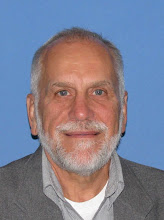

I don't usually respond to "Anonymous" comments, but since I did not say it prior to my post asking for questions I have decided to respond. In the case below I have asked Nancy Skerritt to share her thought on the following question.
Why are we not hiring trainers who create the curriculum? Lucy Calkins, Kathryn Twomey Fosnot, Vicki Spandel, Debbie Miller, etc... to name a few. Training completly for the curriculum is the only way it will be fully implemented and invested in by the teachers. My colleague in another district has sent everyone, that wanted to go, to the Lucy Calkins institute in NY, on the districts dime, yes 13 elementary schools. They are now sending 14 teachers back to NY to train with Fosnot, a pioneer in math problem solving.
Out of the three districts I have been in, our trainings our inadequate and ineffective.
Before sharing Nancy's response let me simply say that she is an example of the person that is not always perceived as an expert in the place that they do their work. Outside our system, however, she is highly respected for her expertise in thinking skills, reader's workshop, and for her capacity in developing curriculum. Though not always appreciated, we are most fortunate to have her leadership in the Teaching and Learning Department. We have been colleagues for many years in our system and I like to think that the two of us have had an influence on our system. I know that she has had an influence on me and my work and I thank her for the leadership, guidance, and support she provides our system.
Her response is below. I will amplify the part about resources. I don't know the district referred to in the question, but most systems that send all teachers have either a grandfathered levy lid meaning they can collect about 9% more than we can (about $6,000,000 each year for us) or they have a foundation that picks up all or part of the cost. For example, in Mercer Island he foundation will purchase new math books with the staff development component. I believe that this has also happened in Issaquah.
Let me share the district’s perspective on curriculum choices and the professional development philosophy that guides our curriculum decisions in the Tahoma School District. As the person responsible for leadership in Teaching and Learning, I have had the opportunity to work with many teacher leaders and administrators over the past decade. We are committed to making curriculum decisions based on extensive research into best instructional practices. We have selected researched based models to guide our work in all major content areas including reading, writing, and math at elementary and secondary levels. At the elementary level, our district sent lead teachers to spend time learning from Stephanie Harvey and Debbie Miller at a week long seminar in Colorado about ten years ago. The people who attended then returned to our district to help us set up and implement lab classrooms in reading using the balanced literacy model with guided reading and reader’s workshop as the centerpieces. We have continued to build on these initial efforts in reading by providing reading specialists at each school and by conducting job embedded support in implementing best instructional practices. Our work has been guided by Strategies that Work and research on the close connection between thinking skills and reading comprehension. Our students achieve at the very highest levels of performance on measures such as the grade 2 reading assessment and the state WASL.
In the area of writing, we identified Lucy Calkins and Ralph Fletcher’s work as representing a model of instruction consistent with constructivist learning practices and a workshop approach to instruction. We conducted book studies, identified lead teachers, piloted assessment models, and developed an implementation framework to support our elementary teachers in implementing a preferred instructional model for writing. Our lead teachers have developed additional curriculum materials to support implementation. This past year, teachers had the opportunity to participate in a study of Lucy Calkins’ book One to One which focuses specifically on conferencing strategies. People involved in the book study viewed video models, tried new ideas in their classrooms, and problem solved issues of implementation. The professional development focused on job embedded support.
This past year, our focus for professional development at the elementary level for all teachers has been on math problem solving. Our work is guided by the expertise of O’Connor, Anderson, and Chapic, authors of Classroom Discussions: Using Math Talk to Help Students Learn. All of our teachers received a copy of this book to guide the instructional expectations for our teachers. We are incorporating a coaching model to support implementation of best practices. Research on effective professional development supports job embedded practices. One time workshops, regardless of how famous the trainer is, are effective for 5 to 10 percent of the participants, according to the research of Joyce and Showers. We have embraced a model of professional development that is researched based and calls for teachers to not just attend a workshop but rather to be supported in trying out new practices in the classroom. The model includes “Learn, Observe, Practice, Feedback, Reflect, and Evaluate.” Our math coaches have provided demonstration lessons, observations with feedback, and core instruction on the preferred practices. We are currently collecting data to help us to understand the next level of support needed to ensure fidelity of implementation in all classrooms.
The reality of our budget, even in better times, is such that we cannot send everyone to national trainings with experts- and we know that the effectiveness is limited when we consider the goal of full classroom implementation. We must rely on learning from the experts through reading and studying their work. Our efforts to implement Classroom 10 rely on our ability to articulate a vision within our district and to be self supporting in providing quality curriculum and the expertise needed to implement that curriculum. We continue to draw at the systems level from experts such as Marzano, Costa, and Senge and we support developing teacher leadership to build capacity at the school level for implementation. Our district is completely committed to quality professional development that is job embedded and provides opportunities beyond an initial training. Even in our time of financial crisis, we will look for ways to continue our initiatives and to ensure “Quality Learning Every Day for Every Child in Every Classroom.”
In the area of writing, we identified Lucy Calkins and Ralph Fletcher’s work as representing a model of instruction consistent with constructivist learning practices and a workshop approach to instruction. We conducted book studies, identified lead teachers, piloted assessment models, and developed an implementation framework to support our elementary teachers in implementing a preferred instructional model for writing. Our lead teachers have developed additional curriculum materials to support implementation. This past year, teachers had the opportunity to participate in a study of Lucy Calkins’ book One to One which focuses specifically on conferencing strategies. People involved in the book study viewed video models, tried new ideas in their classrooms, and problem solved issues of implementation. The professional development focused on job embedded support.
This past year, our focus for professional development at the elementary level for all teachers has been on math problem solving. Our work is guided by the expertise of O’Connor, Anderson, and Chapic, authors of Classroom Discussions: Using Math Talk to Help Students Learn. All of our teachers received a copy of this book to guide the instructional expectations for our teachers. We are incorporating a coaching model to support implementation of best practices. Research on effective professional development supports job embedded practices. One time workshops, regardless of how famous the trainer is, are effective for 5 to 10 percent of the participants, according to the research of Joyce and Showers. We have embraced a model of professional development that is researched based and calls for teachers to not just attend a workshop but rather to be supported in trying out new practices in the classroom. The model includes “Learn, Observe, Practice, Feedback, Reflect, and Evaluate.” Our math coaches have provided demonstration lessons, observations with feedback, and core instruction on the preferred practices. We are currently collecting data to help us to understand the next level of support needed to ensure fidelity of implementation in all classrooms.
The reality of our budget, even in better times, is such that we cannot send everyone to national trainings with experts- and we know that the effectiveness is limited when we consider the goal of full classroom implementation. We must rely on learning from the experts through reading and studying their work. Our efforts to implement Classroom 10 rely on our ability to articulate a vision within our district and to be self supporting in providing quality curriculum and the expertise needed to implement that curriculum. We continue to draw at the systems level from experts such as Marzano, Costa, and Senge and we support developing teacher leadership to build capacity at the school level for implementation. Our district is completely committed to quality professional development that is job embedded and provides opportunities beyond an initial training. Even in our time of financial crisis, we will look for ways to continue our initiatives and to ensure “Quality Learning Every Day for Every Child in Every Classroom.”


